

The Age of the Empire, from the Scenes

- Description
- Curriculum
- Notice
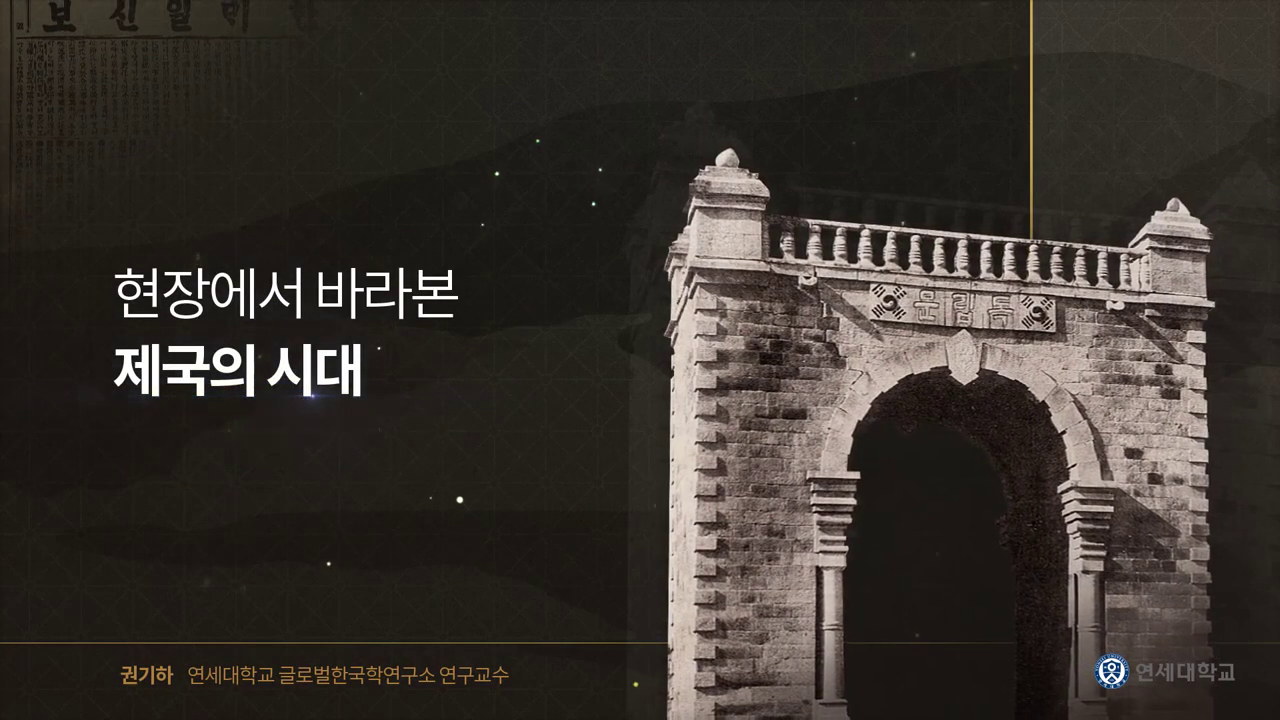
Course Introduction
This course examines modern Korean history from 1864 to 1910, mainly from the perspectives of political and cultural history. This course provides an opportunity to examine the multifaceted image of modernity in Korea while examining the changing world view of Koreans in the historical scene where Korea and the world encountered each other.
Course Structure
This course consists of a total of 10 weeks. Each week’s lecture consists of 2 to 6 videos according to the specific themes of the lecture each week. After completing the video lessons each week, quizzes will be provided to help learners organize and review the course. In Week 2 and Week 7, students are required to write a paper. Students will be recognized as having completed the course upon watching all lecture videos and finishing entire learning activities, including quizzes and a paper.
Subtitles
Korean, English, Chinese
-
1
 1-1. Introduction to the Lecture
 -
2
1-2. Today’s Historical Site
-
3
1-3. The Figure of Heungseon Daewongun and His Politics & Policies
-
4
1-4. Daewongun’s Policies to Strengthen Royal Authority
-
5
1-5. Clashes with France and the U.S. & the Isolationist Policy
-
6
1-6. The Resignation of Heungseon Daewongun and Post-Resignation Politics
-
7
2-1. Today's Historical Site
-
8
2-2. The Last Line of Defense, Ganghwa Island
-
9
2-3. The First Place to Be Invaded, Ganghwa Island
-
10
2-4. The Relationship of Neighborly Relations between Joseon and Japan
-
11
2-5. The Relationship between Joseon and Japan after The Meiji Restoration
-
12
2-6. Autonomy in the Sinocentric World Order vs. Autonomy in the Order Defined by International Law
-
13
3-1. Today's Historical Site
-
14
3-2. Trends of the Joseon Government in the 1870s and 80s
-
15
3-3. The Aftermath of the Military Mutiny of 1882 and the Interests of Qing and Japan
-
16
3-4. The Formation of the Enlightenment School and the Coup d’état of 1894
-
17
3-5. A Three-Day Reign and What Followed
Kiha Kwon
Researcher of the national Institute of Korea History
Kown, Kiha. “A Deepening Sense of Community and Influences from the Confucian Ethos during the National Debt Redemption Movement.” Yeoksa wa hyeonsil 122 (2021): 311-363.
Kown, Kiha. “The Idea of “Uiri(義理)” and Its Influence to the Mass Movement of the Independence Club.” Yeoksa munje yeongu 23, no. 2 (2019): 269-313.