

Political Systems and Governing Experiences in Premodern Korea: A History of Central and Local Areas
This course examines premodern society, characterized by an established centralized bureaucracy, to address the core question: "How did the state ...
Show more

Instructor
igkslms
- Description
- Curriculum
- Notice
Course Overview
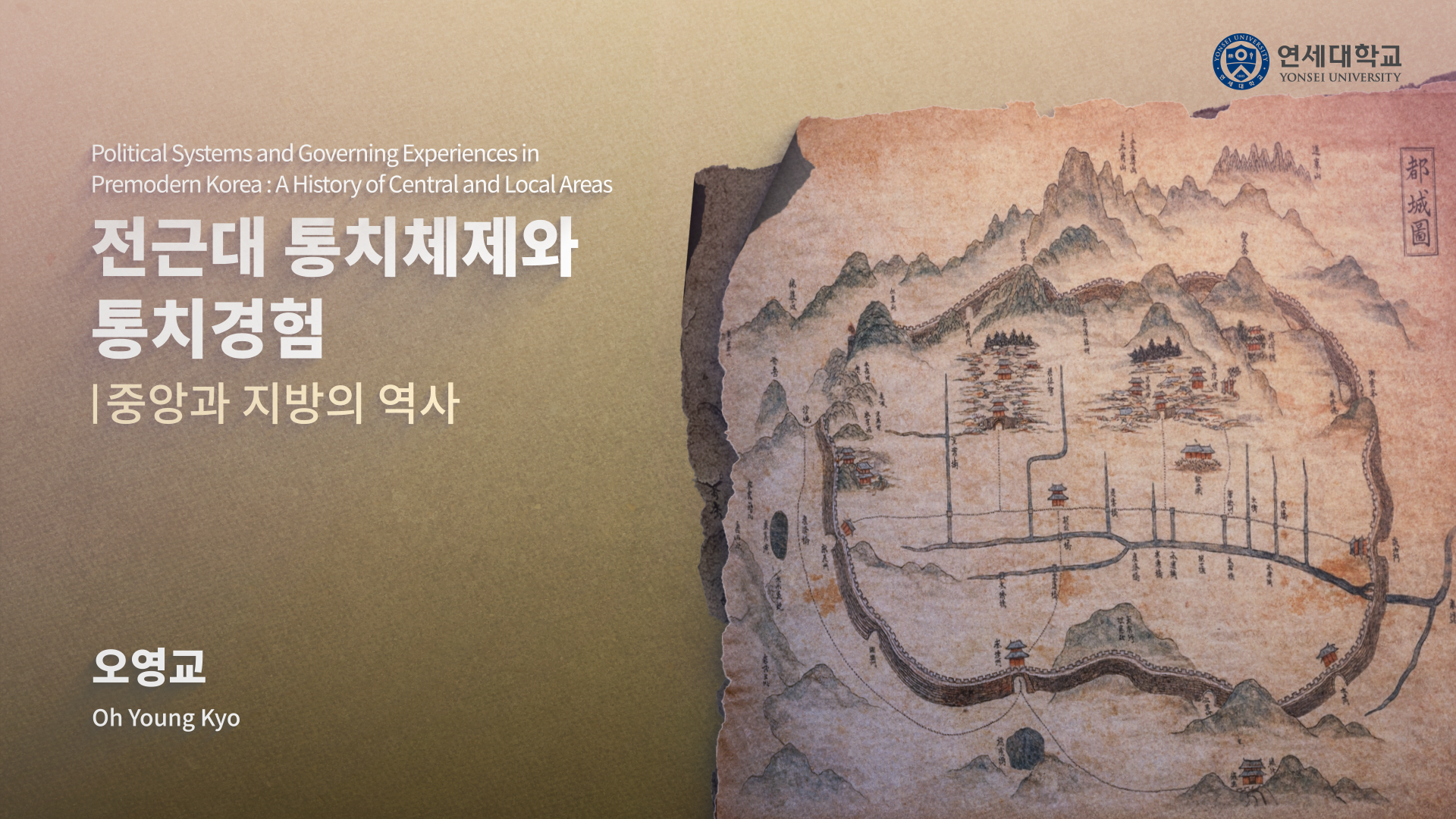
This course examines premodern society, characterized by an established centralized bureaucracy, to address the core question: “How did the state attempt to control the localities, and how did it govern in practice?” Through this inquiry, the course traces the realities of premodern local governance and the dynamics of the populace, ultimately seeking to reconstruct the social landscape of the era and examine its broader historical significance.
Learning Objectives
1) Understand how premodern state governance policies were implemented and experienced at the local level.
2) Investigate the movements of the governed populace as a variable between local powers and state coordination, seeking to understand how they were constituted through structural interactions with state control.
3) Chronologically trace the evolution of local governance across the 500-year span of the Joseon dynasty, analyzing the complete trajectory of Korea’s medieval society through its reorganization, development, destabilization, dissolution, and its eventual search for new paradigms.
4) Detail the lived realities and roles of local magistrates and functionaries as the core agents of local administration and analyze the establishment of local financial systems alongside the significance of spatial organization.
5) Cultivate a historical perspective to interpret the contemporary landscape of current local administrative systems in Korea.
2) Investigate the movements of the governed populace as a variable between local powers and state coordination, seeking to understand how they were constituted through structural interactions with state control.
3) Chronologically trace the evolution of local governance across the 500-year span of the Joseon dynasty, analyzing the complete trajectory of Korea’s medieval society through its reorganization, development, destabilization, dissolution, and its eventual search for new paradigms.
4) Detail the lived realities and roles of local magistrates and functionaries as the core agents of local administration and analyze the establishment of local financial systems alongside the significance of spatial organization.
5) Cultivate a historical perspective to interpret the contemporary landscape of current local administrative systems in Korea.
1. The Establishment and Historical Development of Local Administrative System during the Joseon Period
2. Establishment and Operational Structure of the Local Administrative System in the Early Joseon Period
-
5
 2-1. Formation of the Centralized Bureaucratic System
 -
6
2-2. Formation of the Local Governance Structure
-
7
2-3. Construction of Local Governance Infrastructure: Transportation and Tribute Grain Transport Systems
-
8
2-4. Reorganization of Education and Welfare Foundations: Establishment of County Education and Medical Systems
3. The Local Administrative System and Local Magistrates
4. The Form of Existence and Function of the Local Functionaries
-
13
4-1. Establishment of the Local Functionary System in the Joseon Period
-
14
4-2. Local Governance in the Joseon Dynasty and the Organization and Duties of Local Functionaries
-
15
4-3. Characteristics of the Local Functionary Class and Their Lived History
-
16
4-4. The Self-Perception of Local Functionaries and Their Aspirations for Upward Social Mobility
5. Changes in Local Governance Policies of the Late Joseon Period
-
17
5-1. Local Conditions in the 17th Century and the Crisis of the County-Prefecture and Local Magistrate Systems
-
18
5-2. Development of Local Governance Policies to Overcome the Crisis
-
19
5-3. Resident Scholar-Official Families and Measures for Local Agencies
-
20
5-4. Systematization of Regional Identification and Construction of the Local Ruling System
6. Spaces for Local Governance
-
21
6-1. Formation of Regional Administrative Centers and Guardian Mountains in the Joseon Period
-
22
6-2. Layout and Functions of Government Offices for Governance
-
23
6-3. Correlation between the Official System of Provincial Offices and Its Architectural Configuration
-
24
6-4. A Comparison of the Architectural Compositions of the Hanyang City Wall and the Gangwon Provincial Office
7. Structure and Operation of Local Government Finance
8. State Control of Localities in the Late 19th Century
-
29
8-1. Trends in Local Governance during the First Half of King Gojong's Reign
-
30
8-2. Local Governance Reforms by the Enlightenment Faction during the Gabo Reform Period
-
31
8-3. Directions of Local Governance during the Korean Empire Period
-
32
8-4. A Search for a Modern Local Administrative System: Its Significance and Legacy
Oh, Young Kyo
Professor Emeritus, Yonsei University
Course details
Lectures
32
Level
상급
Popular courses