

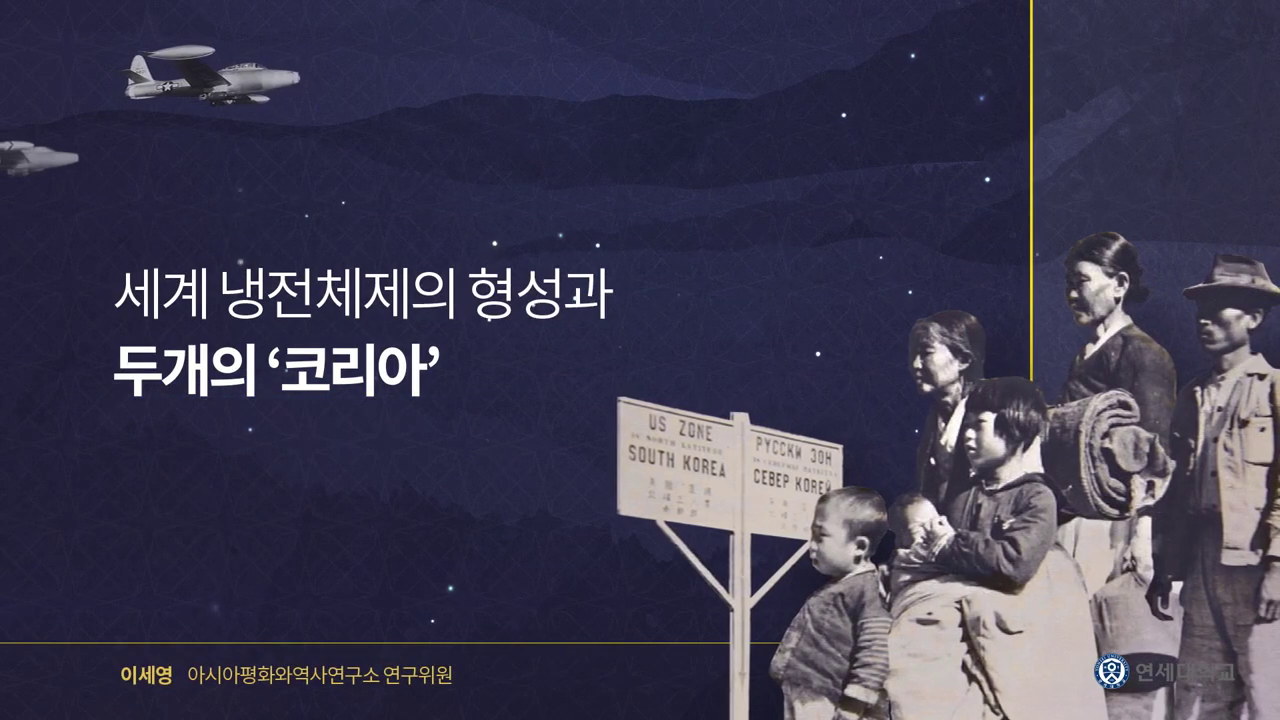
The Formation of the Global Cold War System and the Two Koreas

- Description
- Curriculum
- Notice
Course Introduction
This course examines the eight-year history of liberation from 1945 to 1953, the starting point of modern Korean history, to understand the causes that led to the creation of two Koreas. It also examines the heterogeneous development processes of North and South Koreas after the Korean War and seeks for peace and reconciliation on the Korean Peninsula.
Course Structure
This course consists of 11 weeks, 10 weeks of lecture and a week for a final. Each week’s lecture consists of 3 to 5 videos according to the specific themes of the lecture each week. To assist learners in organizing and reviewing the course material covered each week, the course includes non-video learning elements such as quizzes, discussions, and supplementary reading materials. Students are required to watch the weekly lecture videos and complete the learning activities to be recognized as having completed the course requirements each week.
Subtitles
Korean, English, Chinese
-
6
 2-1. Learning Contents and Objectives
 -
7
2-2. The Preparatory Committee for National Construction and the People’s Republic
-
8
2-3. Formation of Major Political Forces in the South of the 38th Parallel: Right-Wing
-
9
2-4. Formation of Major Political Forces in the South of the 38th Parallel: Left-Wing
-
10
2-5. Formation of Major Political Forces in the North of the 38th Parallel and Summary
-
16
4-1. Learning Contents
-
17
4-2. Convening and Collapse of the 1st US-Soviet Joint Commission
-
18
4-3. USAMGIK’s Attempt to Foster a Centrist Group in the South and Its Failure
-
19
4-4. Debates Over Pro- and Anti-Trusteeship in North Korea
-
20
4-5. Start of Cold War between the US and the Soviet Union: The Truman Doctrine
-
21
4-6. Convening and Collapse of the 2nd US-Soviet Joint Commission
-
22
5-1. Transfer of the issue of Korea to the UN
-
23
5-2. Discussions and Activities of the UN
-
24
5-3. Consolidation of Centrists and the North-South Joint Conference
-
25
5-4. Struggle against a Separate Election and a Separate Government: The Jeju Uprising of April 3 and the Yeo-Sun Rebellion
-
26
5-5. Birth of the Two Koreas
-
35
8-1. South Korean Political Landscape between 1948 and 1950) and Rhee Syngman’s Argument for Unification by Advancing North
-
36
8-2. Conflicts around the 38th Parallel and the Small War
-
37
8-3. The Argument for the Consolidation of National Territory and North Korea’s Preparations for War
-
38
8-4. Changes of the International Political State of Affairs in 1949 and the Approval of the War
-
39
8-5. Summary
Se Young Lee
Researcher of the Asia Peace & History Institute
Lee, Se Young. “The Formation of ‘Socialist’ Workers and Changes in Production Sites in North Korea (1945-1960).” PhD diss. Younsei University, 2020.
Lee, Se Young. “The Increase and Decrease of Soviet Influence and the Response of North Korean Workers in the 1950s.” Donghang hakji 193 (2020): 269-298.
Lee, Se Young. “Establishment of Workplace Cultural Facilities and Worker's Cultural Activities in North Korea (1945~1950).” Yeoksa munje yeongu 26, no. 1. (2022): 59-92.